Overweight (BMI) | Medtick

Overweight (BMI)

What is it?

Obesity is the result of eating more calories than the body can burn or use on a regular basis, however weight control is more complex and depends on many factors.

  • The body then stores the excess calories as fat.
  • As the extra calories are consumed each day, the body continues to accumulate extra fat stores, leading to obesity.

VerywellHealth

  • It is characterized by excess adiposity (the state of having an excess of body fat) that leads to alterations in the function of tissues, organs, or the individual’s overall ability to perform daily activities.
  • The aim is to regain or improve body functions that have been impaired by excess body fat.

Preclinical obesity

  • Refers to individuals who have excess body fat but do not currently have health complications directly resulting from this adiposity (the state of having an excess of body fat). However, they are at significantly increased risk of future obesity-related health issues.

Metabolically obese normal weight

  • The condition in which an individual has a normal weight but exhibits metabolic health issues typically associated with obesity is often referred to as “metabolically obese normal weight”

Obesity Life cycle

Obesity should be monitored from the moment of pregnancy (never diet and have the intention to loose weight in pregnancy but instead eat healthy and do moderate exercise) to when the child is born to teenager to adult hood.

  • Pregnant women attending their first appointment with a midwife were either overweight or obese.
  • Evidence shows a significant relationship between maternal obesity and the birth of babies above a normal weight range, and the subsequent development of childhood and adult obesity.
  • Children who live in a family where at least one parent or carer is obese are more at risk of becoming obese themselves.
  • Children with obesity are more likely to be obese in adulthood and thus increase the risk of obesity for their own children in later life.
  • Poor diet and a low levels of physical activity are the primary causal factors of excess weight.
  • This can lead to:
    • Stigmatisation
    • Low self esteem
    • Poor psychological and emotional health
    • Bullying
    • School absence,
    • Increased later ill health and/or disability
    • Premature mortalilty in adult hood

Obesity and excess weight are significant health issues for adults across the life course and into old age.

  • Carrying excess weight can have significant implications for an individual’s physical and mental health.

Some of the significant issues are:

  • Reduction in life expectancy by 3 years on average. Severe obesity reduces it by between 8 and 10 years
  • Less likely to be in employment
  • Discrimination and stigma
  • Increased risk of hospitalisation

Many factors affect obesity, examples are shown below and they are not all one fault, it is simply not the case that it’s the individual fault:

Psychosocial

The term ‘psychosocial’ relates to the way that social factors affect states of mind. Psychosocial influences play a role in what people eat and how active they are. For example:

  • Social and cultural norms and family habits are a strong influence on taste preferences and dietary choices
  • Food consumption – the what and how much – can be affected by emotional states
  • Often people experiencing challenging circumstances are less able to make decisions that favour long-term benefits; therefore making healthy choices may be more difficult for those living in such circumstances

Behavioural

  • Our daily lives are filled with choices, whether it is the food we eat or how active we are. However, many of these are automatically formed around our habitual behaviour.
  • Habits are difficult to change, especially in an environment which encourages inactivity and the consumption of too many calories. It is almost inevitable that some people will gain weight and/or find it difficult to reduce their weight.

Biological and Physiological

There are a number of biological factors that can increase the risk of an individual gaining excess weight, especially when faced with an unhealthy environment. These include:

  • Genetic predisposition
  • Rare genetic conditions that can increase the risk of severe obesity e.g. leptin deficiency
  • Certain medical conditions e.g. hypothyroidism
  • Certain medications e.g. anti-psychotics
  • Maternal and early life factors e.g. maternal obesity

Environmental

  • Our environment tends to encourage unhealthy lifestyle choices relating to food and physical activity.
  • Unhealthy food and drink choices (including alcohol) are easy to access and are often high in energy.
  • We also tend to be less active and lead more sedentary lifestyles than previous generations, persons tends to rely more on technology, less manual jobs, increase travel time and longer hour jobs.

What Group is Most Affected And What Inequalities Are Associated With Obesity?

Obesity affects many. However it does not affect all groups equally, it is more common among:

  • Women from more deprived areas
  • Children in poor deprived areas.
  • Older age groups (above 45 years)
  • Some black and minority ethnic groups i.e. Indian, Pakistani, Bangladeshi groups.
  • People with disabilities

e-Learning for Healthcare


BMI calculator

weightwatchers

Weight Loss treatment

  • Obesity is a serious issue that need tackled, not only can it lead to heart disease and cancer.
  • It is about consuming less calories than body needs to function and can affect our social life, finances and our well being.

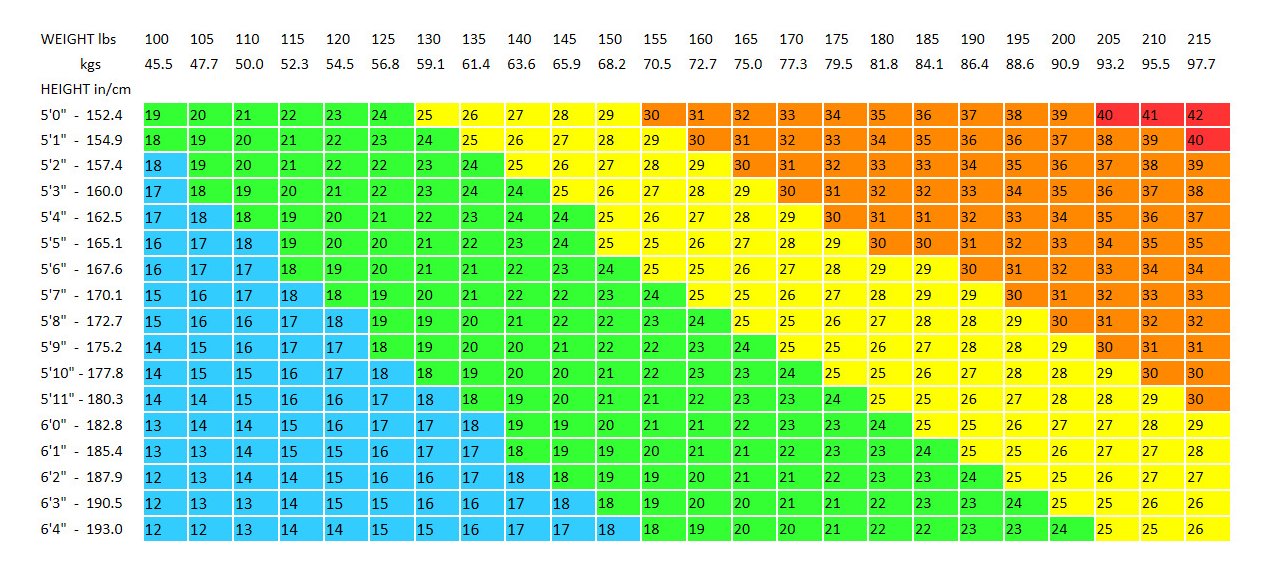
Body Mass Index

It should be used a screening tool, not a diagnostic criterion. BMI does not accurately reflect excess body fat or fat distribution or its impact on health
  • This reading should be used as a guide to check if one is under or overweight.

Screen Shot 2015-09-10 at 14.59.55 copy

If less than 18.5 Underweight
18.5- 24.9: Aim to stay at weight ideal
Asian/Black population: should aim to be between 18.5-23
25- 29 Overweight
30-34.9 Obesity 1: Moderate Overweight
35-39.9 Obesity II: Severe Overweight
40 or greater Obesity III: Need to check one’s health


BMI does not take account of:

  • High muscle mass
  • Bone density
  • Age
  • Sex
  • Ethnicity
  • Fluid retention
  • Loss of limbs
  • Overall body shapes
  • Genetics
  • Fitness
  • Pre-existing disease
  • Size
  • Metabolism (how quickly one burns energy)
  • Are under 18 years old (please click link to calculate BMI for children and teenagers)
  • Are pregnant
  • Adults who loose muscle as they get older (may fall into ‘healthy weight’ range even though they have excessive fat.
  • Have been diagnosed with an eating disorder, or think you may have one
  • Have a condition that affects your height
  • Further information

Video link to measure height and weight:

  • Remove shoes, keep hair down, afros and turbans can’t be measure accurately.
  • Ask person to look straight ahead, top of ear canal should be inline with cheekbone.
  • If patient can’t stand there is a method to measure via the arm but must be done by a trained medical professional in anthropometry
  • Make sure weight machine is calibrated to zero before using.
  • Person place feet on the right part of machine (stand in centre of machine with weight distributed evenly through their feet onto the scale) and does not lean to one side,
  • Remove any jewellery, heavy jacket and clothing and empty pockets to obtain an accurate reading.
  • Operate the machinery to the manufactures instruction and make sure one waits (wait for fluctuations to settle) for the final reading.

Waist size

Video link to measure waist

  • Do not rely on cloth measurements it can vary.

BMI determines the degrees of overweight or obesity in adults and is associated with health risk, it does not make any specific measurement of fat , therefore one can have a high BMI with low fat i.e. athletes, physically muscular and or highly physical active and ethnic background persons  with a healthy BMI reading can still be at risk of medical conditions such as diabetes , hence waist size needs to be measured and these reading need to be considered as well.

  • Middle eastern, Chinese, South Asian, Afro- Caribbean, Black Caribbean have a high risk of diabetes type 2 despite normal BMI range hence need alternative measurement, and on top of that it varies with in Asian ethnicities so there are no valid cut off points on measurement, therefore WHO guidelines are recommended as International classification rather than specific to races.
  • Waist circumference provides information on distribution of fat particularly central adiposity (overweight/obese).
  • Patient with abdominal or central distribution of fat increased risk of cardiovascular risk  and increased insulin resistance.
  • More fat you have it leaks a chemical which stops glucose being used correctly  and  it increases insulin resistance.

Box 1: International guidance on BMI/waist circumference thresholds

WHO advice on BMI public health action points for Asian/Black populations (World Health Organization 2004)
White European populations Asian/Black populations Description
Less than 18.5 kg/m² Less than 18.5 kg/m² underweight
18.5–24.9 kg/m² 18.5–23 kg/m² increasing but acceptable risk
25–29.9 kg/m² 23–27.5 kg/m increased risk
30 kg/m² or higher 27.5 kg/m² or higher high risk
International Diabetes Federation guidance on waist circumference thresholds as a measure of central obesity (Alberti et al. 2007)
European Men ≥ 94 cm (37 inches)
Women ≥ 80 cm (31.5 inches)
South Asian/Black population Men ≥ 90 cm (35 inches)
Women ≥ 80 cm (31.5 inches)
Chinese Men ≥ 90 cm (35 inches)
Women ≥ 80 cm (31.5 inches)
Japanese Men ≥ 90 cm (35 inches)
Women ≥ 80 cm (31.5 inches)
Ethnic south and central Americans Use south Asian/Black population recommendations until more specific data are available
Sub-Saharan Africans Use European data until more specific data are available
South Asian Health Foundation position statement on BMI and waist circumference (Kumar et al. 2010)
Recommends lower thresholds for advising South Asians/Black population to adopt a healthier lifestyle and avoid further weight gain. States that South Asians/Black population should be targeted as a special group for raising awareness of the risks of obesity. The Foundation supports a lower threshold of 23 kg/m2 for classification as overweight in British South Asians/Black population, as suggested by other expert groups. It acknowledges that more research is needed to establish appropriate thresholds for waist circumference in different sub-groups. In the meantime, it suggests that men with a waist circumference greater than 90 cm (35 inches) and women with a waist greater than 80 cm (31.5 inches) should be considered overweight.


Waist circumference guide (regardless of BMI):


Low waist circumference


men <94cm (37 inches)


Ethnic minority  men   <90cm (35.4 inches)


women <80cm (31.5 inches)


Ethnic minority women <80cm (31.5 inches)


High waist circumference


men > 94 cm -102 cm

(37 inches- 40.1 inches)


women 80-88cm

(31.5 inches – 34.6 inches)


Very high waist circumference


men >102cm

(40.1 inches)


women >88cm

(34.6 inches)


BMI and Waist size guidelines (and its relationship) and when to see your medical doctor


Men

BMI Waist less than 94cm Or 37 inches Waist larger than 94cm or 37 inches Waist greater than 102cm or 40 inches
Asians/Black population:
Waist larger than 90cm or 36 inches
25-29.9 No increased risk Increased risk High risk
30-34.9 Increased risk High risk very high risk


Women

BMI Waist less than 80cm Or 32 inches Waist larger than 80cm or 32 inches Waist greater than 88cm or 35 inches
Asian/Black populations:
Waist larger than 80cm or 32 inches
25-29.9 No increased risk Increased risk High risk
30-34.9 Increased risk High risk very high risk

If there is a risk of disease one should make an appointment to see their medical doctor

  • One needs to see your medical doctor
  • One needs to see your medical doctor urgently

Intervention:

When one needs to do something about their weight and fat distribution

  • The level of intervention is related to waist circumference, BMI and  current health condition

BMI

Waist circumference Waist circumference Waist circumference Comorbidity present (other conditions i.e. diabetes, heart condition, high cholesterol)

Low

High Very high

Overweight

1 2 2

3

Obese 1

2

2 2

3

Obese 11

3

3

3

4

Obese 111 4 4 4

4


  1. General advice on healthy weight and weight loss
  2. Diet and physical activity
  3. Diet and physical activity and consider medicine
  4. Diet and physical activity and consider medicine/surgery

NICE Clinical Guideline 189

  1. General advice on healthy weight and weight loss
  2. Diet and physical activity
  3. Diet and physical activity and consider medicine
  4. Diet and physical activity and consider medicine/surgery

NICE Clinical Guideline 189

When to consider medication

  • Use of medication will only be considered if you are overweight and have met the criteria above, only obtain from a medically trained healthcare professional.

When to consider surgery

  • Please note if one has a BMI greater 35kg/m2 with Comorbidity or  greater than BMI 40kg/m2, surgery intervention should be considered.
  • If has a BMI 30-34.9 kg/m2 and one has poorly controlled diabetes and has tried and failed to achieve clinical beneficial weight by all appropriate non- surgical methods including medication.

Waist to height ratio

Other methods to check Obesity is the waist to height ratio, it takes account of excess fat around the abdominal area.

  • It is not useful in patients:
    • Adult with a BMI over 35
    • The person you’re using it for is under 5 years old
    • Pregnant
    • Diagnosed with an eating disorder, or think you may have one
    • Growth disorder or any other condition that affects your height

For example if has a waist circumference 81.2cm and is 170cm tall, his ratio is: 81.2/170 = 0.47 which is a healthy condition.

  • Healthy = 0.4- 0.49
  • higher risk = 0.49- 0.59
  • Increased higher risk 0.6 or more

The aim is to maintain a ratio of 0.5 or less, if higher than 0.5 please talk to a healthcare professional on measure to loose weight.

Intervention:

When one needs to do something about their weight and fat distribution

  • The level of intervention is related to waist circumference, BMI and current health condition based upon waist to height ratio:

BMI

 healthy weight

(0.4-0.49

Increased health  risk

(0.49-0.59)

Very high increased health risk

(0.6 or more)

Comorbidity present (other conditions i.e. diabetes, heart condition, high cholesterol)

Low

High Very high

Overweight

1 2 2

3

Obese 1

2

2 2

3

Obese 11

3

3

3

4

Obese 111 4 4 4

4


  1. General advice on healthy weight and weight loss
  2. Diet and physical activity
  3. Diet and physical activity and consider medicine
  4. Diet and physical activity and consider medicine/surgery

When to consider medication

  • Use of medication will only be considered if you are overweight and have met the criteria above, only obtain from a medically trained healthcare professional.

When to consider surgery

  • Please note if one has a BMI greater 35kg/m2 with Comorbidity or  greater than BMI 40kg/m2, surgery intervention should be considered.
  • If has a BMI 30-34.9 kg/m2 and one has poorly controlled diabetes and has tried and failed to achieve clinical beneficial weight by all appropriate non- surgical methods including medication.

Cause

Syndromes

Medication

Symptoms

  • Excess or abnormal amount of body fat/weight gain i.e. around waist (not due to muscle)?
  • Large belly/belly sticks out?
  • Shortness of breath/Feeling out of breath and or breathing difficulties?
  • Sleep apnoea and/or snoring?
  • Long term persistent indigestion and/or frequent heartburn and/or constant abdominal pain and swelling?
  • Hot flushes and/or flushed face and/or warm skin and/or slight sweating and/or dislike to heat?
  • General discomfort (muscle weakness), uneasiness or ill feeling (malaise) and/or fatigue (tiredness)?
  • Back pain?
  • One find passing stools difficult (can be painful) and constipated?
  • Joint pain stiffness and pain?
  • Aching, painful muscles, muscle cramps/spasms/stiffness?
  • Skin  fungal rashes(from moisture accumulating in the folds of skin)?
  • Acanthosis nigricans (dark velvety skin around the neck and other areas)?
  • Stretch marks on the hips and back?
  • Inability to perform simple physical tasks (that one could easily do)?
  • Feeling low and depressed?
  • Feelings of isolation/unsociable/self blame/alone/shame?
  • Flat feet?
  • Early puberty (unusual early vaginal bleed) in girls/delayed puberty in boys?
  • Loss interest of sex and/or low sex drive?

Male:

Complications /Information to beware of/General tips:

Do not wait, phone for ambulance if have or develop:


This condition can lead to:

One needs to beware of staying within limits of drinking alcohol as this condition (especially those who have had a Roux-en-Y gastric bypass surgery can increase risk of Alcohol-Associated Liver Disease

This condition may show similar symptoms to:

Please talk to your healthcare professional (i.e. Medical Doctor/Pharmacist) for further advice

Detailed Information

Please copy and paste any key words from the title: Overweight (BMI) in the following respective 'Medtick References and/or Sources' to find out more about the disease (this also may include diagnosis tests and generic medical treatments).

  • Medical News Today

    Medical news and health news headlines posted throughout the day, every day.

  • Medscape (Professional level)

    Latest medical news and expert commentary in your specialty as well as disease information.

  • Healthline

    Medical Information and health advice you can trust

  • EveryDay Health

    Wellness inspired. Wellness enabled.

  • Pharmaceutical Journal (Professional level)

    The Pharmaceutical Journal covers analysis, features, opinion, learning and careers articles, providing insight and knowledge about drugs, pharmacy practice, medicines use and healthcare policy in the context of the pharmacy profession and pharmaceutical science.

  • NHS

    Find information and advice on health conditions, symptoms, healthy living, medicines and how to get help (British National Health Service).

  • WebMD

    Better Information. Better Health.

  • Cleveland Clinic

    Pushing the Standards of care.

  • Mayo Clinic

    No.1 Hospital in the Nation (America)

  • Drugs.com

    Know more. Be sure.

  • National Organisation of Rare Diseases

    NORD is dedicated to supporting education, elevating care, advancing research, and driving policy for rare diseases.

  • Verywell Health

    Know more. Fell better.

  • Nathnac

    Travel health guidance for health professionals advising travellers and for travellers going overseas from the UK.

  • DR Axe

    Health and fitness news. Recipes, Natural Remedies

  • Better health - NHS

    Healthy changes start with little changes. Whether you want to lose weight, drink less alcohol, get active or quit smoking, you have access to lots of free tools and support through Better Health. You can also find simple ways to lift your mood with Every Mind Matters.

    There has never been a better time to kickstart your health. Let’s do this!

Diet, Exercise and Body Manipulations

Diet (for those who are overweight with high blood pressure)

  • Consider calorie restriction, specifically the DASH diet, is the most effective intervention for lowering blood pressure through weight loss. The review cites a comprehensive meta-analysis, which notes “aerobic exercise, isometric training, low‐sodium and high‐potassium salt, comprehensive lifestyle modification, salt restriction, breathing‐control, meditation and low‐calorie diet also have obvious effects on blood pressure reduction,” but low-calorie diets could lower blood pressure more than exercise alone.
  • The DASH diet involves low intakes of fat, sugar, and salt and high consumption of fruits, vegetables, whole grain, and lean protein.
  • It may have an even greater anti-hypertensive effect than the Mediterranean diet.

Medscape