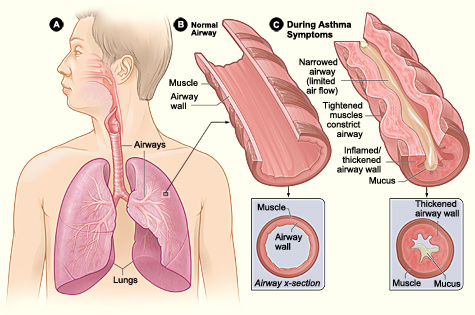
Common reversible respiratory (breathing) condition causing tightening and swelling of airways (bronchial smooth muscle).
It can occur at any age and is common in children.
The symptoms can be controlled (unless severe asthma) and is not usually progressive, however it is unpredictable and can get severe with little warning.
Asthma can exist with long term lung conditions: Chronic obstructive pulmonary disease (COPD)
(The main mediators involved are eosinphils, in an attack both eosniphils and neutrophils involved)
Exercise Induced Asthma (EIA)
It normally occurs after 5-8 minutes of severe aerobic exercise or within 15 minutes from starting the exercise. Other symptoms of EIA include:
Chest tightness or pain
Cough
Fatigue
Prolonged recovery time
Shortness of breath
Wheezing
Underperformance or poor performance on the field of play
Rare condition called Exercise-induced urticaria (In this condition, an early stage of exercise-related fatigue and itchiness is followed by early onset of urticaria and angioedema (swelling) which are initially mild. However, if progression occurs, it may be serious or even life-threatening).
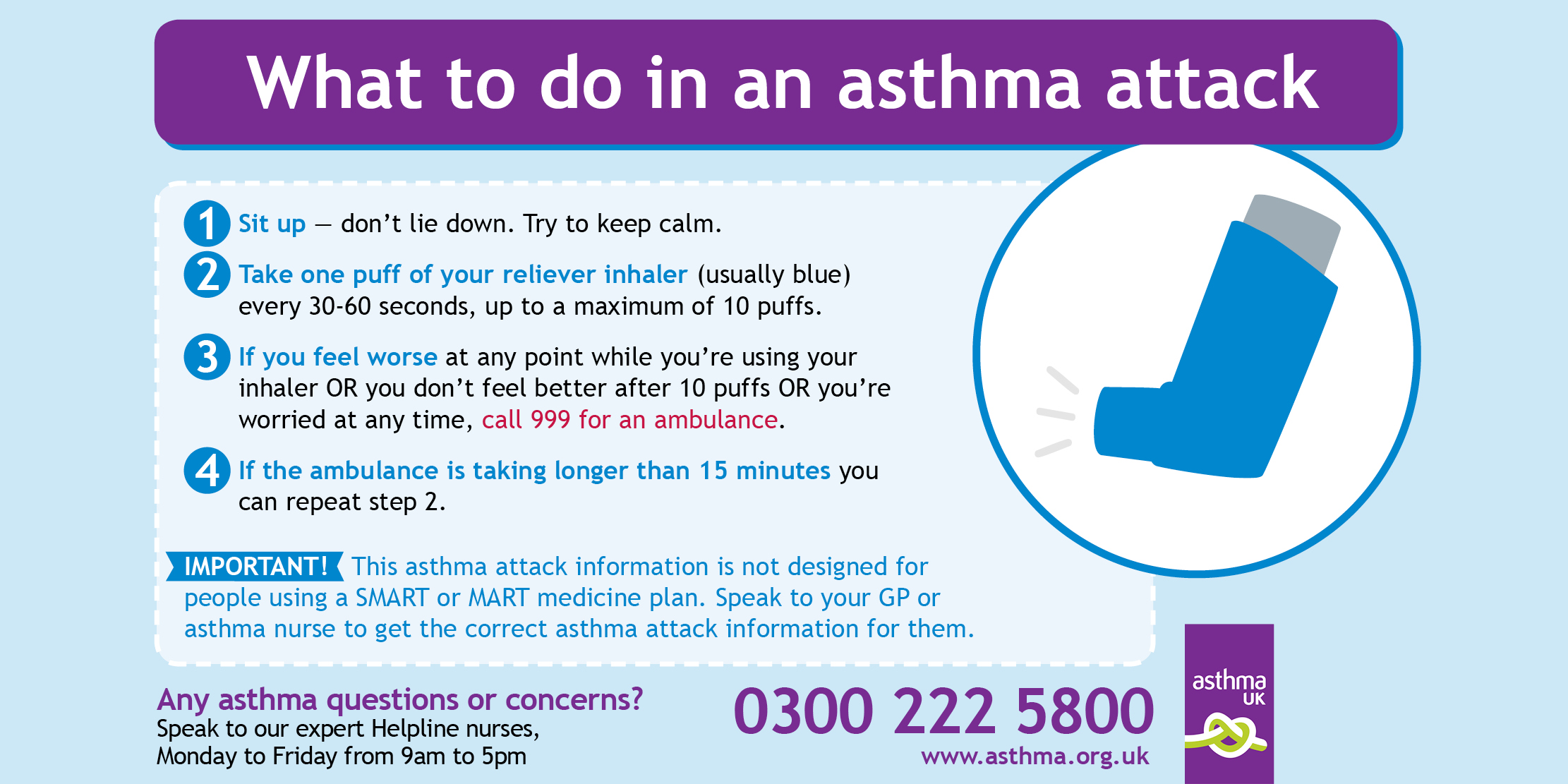
Source: Asthma UK ' Phone 999 applies to UK only - please call your Ambulance service'
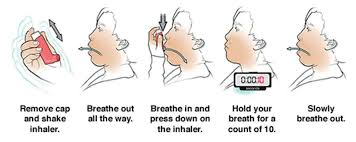
Source: Isle of Wight NHS Trust
Symptoms
(Symptoms are variable, and occur at any time particularly if exposed to an allergen)
Shortness of breath (gasp for breath)?
Tight chest?
Wheezing, a high pitched whistling sound when breathing?
Coughing at mornings and especially at night?
Breathing difficulties when exercising?
Increased night-time waking with wheeze cough causing a lack of sleep?
Inability to speak in full sentences?
Complications /Information to beware of/General tips:
Do not wait, phone for an ambulance if have or develop:
Anaphylaxis (Rare condition called Exercise-induced urticaria (In this condition, an early stage of exercise-related fatigue and itchiness is followed by early onset of urticaria and angioedema (swelling) which are initially mild. However, if progression occurs, it may be serious or even life-threatening).
Sudden onset of cough or wheeze in the absence of an upper respiratory infection may have a retained foreign body.
This cough can be mistaken for bronchiolitis, asthma, croup, and other infectious conditions, especially because a partial obstruction can make diagnosis confusing or challenging. Adding to the challenge is that most foreign bodies will be radiolucent.
A decubitus chest x-ray could be useful, but bronchoscopy is necessary for diagnosis.
Pneumorrhachis – medical condition in which air has entered the spinal canal.
Causes are mainly due to:
Alveolar rupture (a significant prolonged or strong cough, or through bronchospasm related to respiratory tract infection)
Perforation or rupture of the oesophagus, trachea, or main bronchi
Dissection of air from the neck or abdomen
One will have chest pain and/or breathing difficulties (medical emergency)
Athletes can minimize the likelihood of bronchospasms by warming up for 15-30 minutes, followed by a 15-minute rest period, allowing the competition to coincide with a refractory phase.
The refractory period of EIA occurs 1-3 hours from the start of the exercise.
It is unpredictable and intermittent, and the results could be one half the degree of bronchospasm in the first episode.
Other nonpharmacologic measures can also be taken in the treatment of EIA, such as nasal breathing (not mouth breathing), which can result in less bronchospasm because the inhaled air is warmer and humidified.
Medscape
Please talk to your healthcare professional (i.e. Medical Doctor/Pharmacist) for further advice
Detailed Information
Please copy and paste any key words from the title: Asthma/Asthma attack in the following respective 'Medtick References and/or Sources' to find out more about the disease (this also may include diagnosis tests and generic medical treatments).
The Pharmaceutical Journal covers analysis, features, opinion, learning and careers articles, providing insight and knowledge about drugs, pharmacy practice, medicines use and healthcare policy in the context of the pharmacy profession and pharmaceutical science.
Healthy changes start with little changes. Whether you want to lose weight, drink less alcohol, get active or quit smoking, you have access to lots of free tools and support through Better Health. You can also find simple ways to lift your mood with Every Mind Matters.
There has never been a better time to kickstart your health. Let’s do this!