Stay isolated until all chickenpox blisters have crusted (scabbed) over. This typically takes about 5–7 days after the rash first appears.
A person is contagious from 1–2 days before the rash appears until all lesions have crusted.
For people who had chickenpox after vaccination), lesions may not crust. In that case, isolation is generally recommended until no new lesions have appeared for 24 hours.
People cannot catch shingles from someone with chickenpox. But they can catch chickenpox from someone with shingles if they have not had chickenpox before.
Fever or pain relief
Do not take ibuprofen to reduce fever in this condition as it can lead to skin reactions as well as it can lead to secondary infection including Pneumonia and Necrotising fasciitis.
Diagnosis tests
PCR (Polymerase Chain Reaction) test
Direct Fluorescent Antibody (DFA) test
Viral culture
Blood tests (serology)
Measure antibodies (IgM and IgG) against the varicella-zoster virus.
Cause
Virus: Varicella-Zoster virus
From others affected by chickenpox.
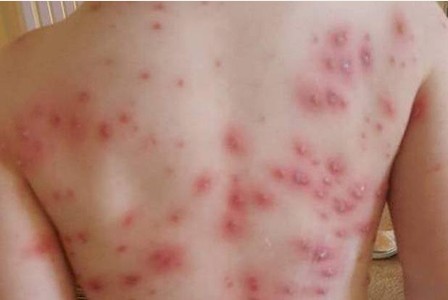
Source: Scunthorpe Telegraph
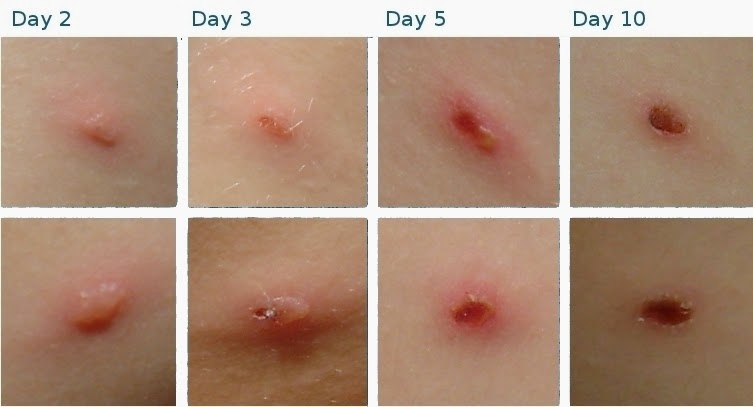
Source: New Health Advisor
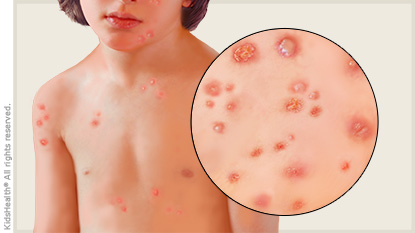
Source: KidsHealth
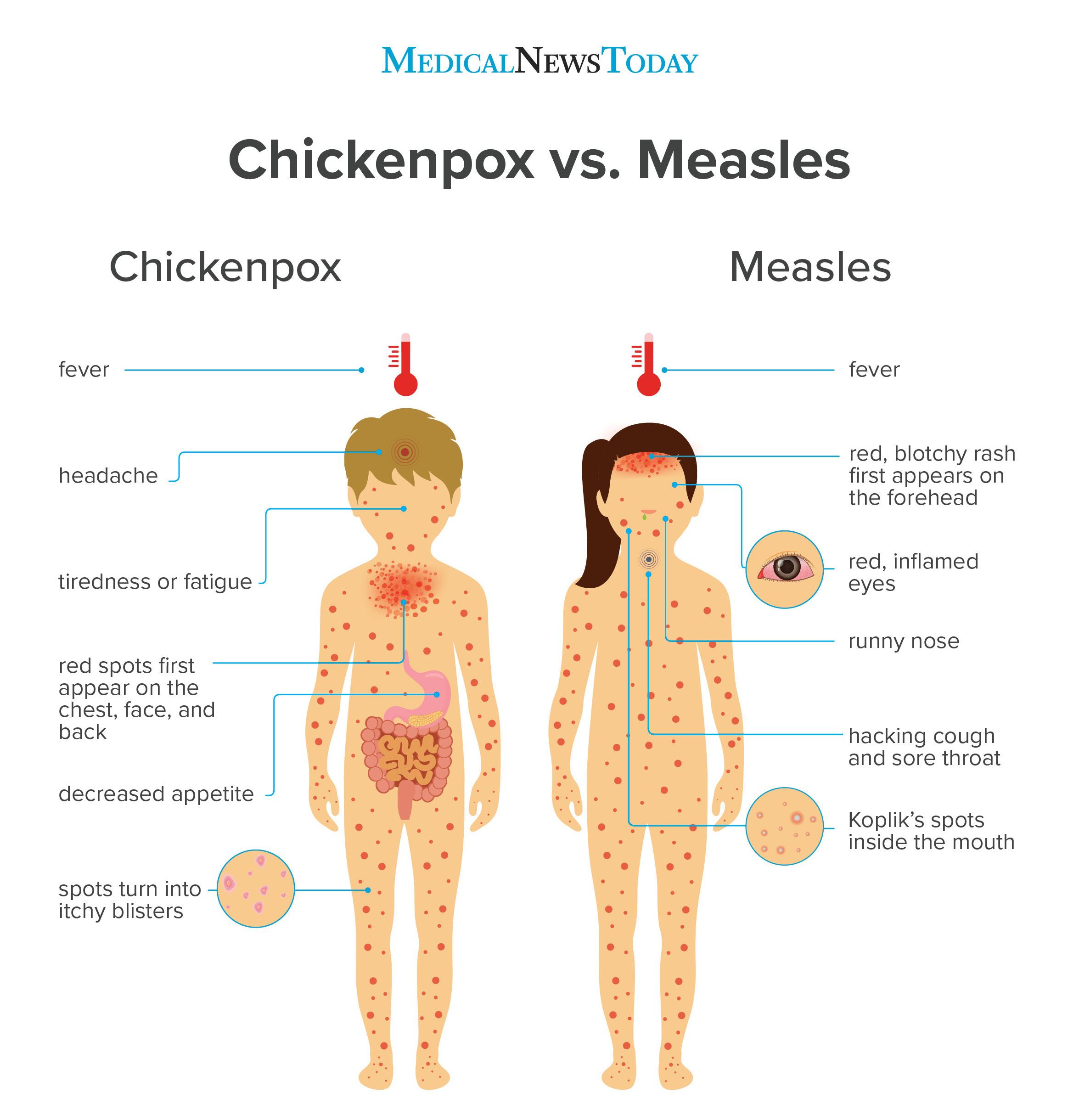
Source: https://www.medicalnewstoday.com
Symptoms
Mild flu-like symptoms:
High temperature greater than 38°C (100°F) or over and/or chills and sweats longer than 72 hours?
Headache which is on and off or a constant headache longer than 24 hours?
General discomfort (muscle weakness), uneasiness or ill feeling (malaise) and/or fatigue (tiredness)?
A new rash that has appeared or existing rash getting worst (a red rash which starts as small itchy red spots, then approximately 12 hours later the spots turn into fluid filled blisters, when they burst it is contagious. Blisters can form on hands, feet, inside mouth or on genitals as open sores. After 1-4 days blisters dry out and begin to crust over. One or two week’s later skin will fall off naturally. It can vary to a few spots to all over body rarely on back)?
Complications /Information to beware of/General tips:
Do not wait, phone for an ambulance if have or develop:
Infection during the first 28 weeks can result in a rare but serious condition called congenital varicella syndrome, which may cause shortened limbs, vision problems (such as cataracts), brain damage and scarring.
Infection during weeks 28 to 37 can mean your baby is at risk of developing shingles at some point after they’re born.
Infection a week before to a week after birth can mean your baby is a risk of a severe and potentially life-threatening chickenpox infection.
Do no treat this condition with steroidal cream and/or moisturisers as it may make the condition worst.
One can use anti-histamines (if suitable), chicken pox gels and lotions (if suitable) and/or calamine lotion (if suitable) to calm the skin down if its it itchy and/or sore.
If it appears infected and/or is getting worst, your medical doctor will decide if antibiotics and/or viral medication is required (do not self diagnose).
Please talk to your healthcare professional (i.e. Medical Doctor/Pharmacist) for further advice
Detailed Information
Please copy and paste any key words from the title: Chicken Pox in the following respective 'Medtick References and/or Sources' to find out more about the disease (this also may include diagnosis tests and generic medical treatments).
The Pharmaceutical Journal covers analysis, features, opinion, learning and careers articles, providing insight and knowledge about drugs, pharmacy practice, medicines use and healthcare policy in the context of the pharmacy profession and pharmaceutical science.
Healthy changes start with little changes. Whether you want to lose weight, drink less alcohol, get active or quit smoking, you have access to lots of free tools and support through Better Health. You can also find simple ways to lift your mood with Every Mind Matters.
There has never been a better time to kickstart your health. Let’s do this!