The virus’ is spread in the blood, body fluids or organs of a person or animal with the infection.
For example, it can be spread by:
Directly touching the body of someone with the infection who has symptoms or recently died – the virus can survive for several days outside the body
Cleaning up body fluids (blood, stools, urine or vomit) or touching the soiled clothing of an infected person
Handling unsterilised needles or medical equipment used in the care of the infected person
having sex with an infected person without using a condom – studies show traces of virus may remain in a man’s semen many months after he has recovered
Handling or eating raw or undercooked “bushmeat”
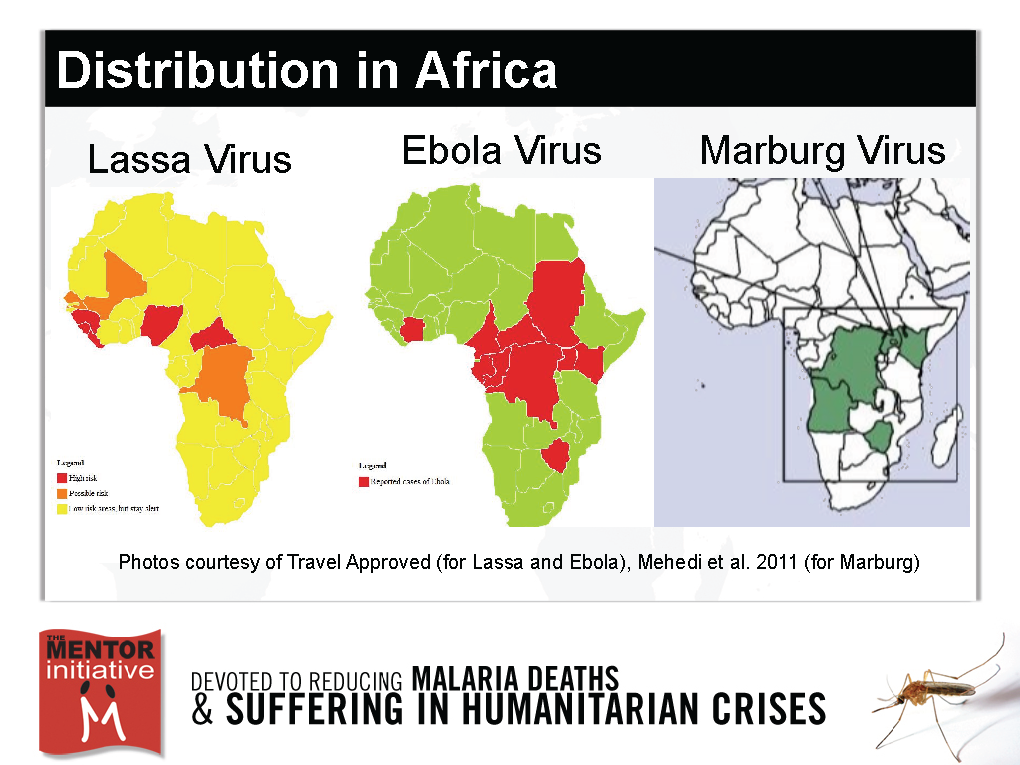
Countries affected specifically:
Alkhurma hemorrhagic fever (Saudi Arabia and Egypt)
Bunyavirus Haemorrhagic fever (Severe fever with thrombocytopenia syndrome) – caused by SFTS virus (SFTSV) (Japan).
Chapare virus (Bolivia)
Crimean-Congo Haemorrhagic Fever [Eastern and southern Europe (Spain and Bulgaria), Central Asia, all of Africa, Middle East]
Ebola fever virus (The Democratic Republic of the Congo, Gabon, Guinea, Republic of the Congo):
Sudan virus (South Sudan, Uganda)
Bundibugyo virus (The Democratic Republic of the Congo, Uganda)
Taï Forest virus (Cote D’Ivoire)
Zaire ebolavirus (near the Ebola River, The Democratic Republic of the Congo)
Reston ebolavirus infects cynomolgus macaques and domestic pigs, not humans (China, Philippines and America)
Guanarito virus (Venezuela)
Hantavirus (Austria, Croatia, Hungary and Slovenia, Asia, North, Central, and South America)
Hendra disease (Australia)
Kyasanur Forest Disease (Karnataka State, South India)
check for low red blood cells, low white blood cell and low platelet count
Blood group tests
Coagulation profile
check how blood is clotting
Liver tests
Kidney tests
Reverse-transcription PCR (RT-PCR)
Antigen detection assays
ELISA tests of IgG and IgM antibodies
Viral culture:
High-containment (BSL-4) facilities required
Imaging for organs
Further test to eliminate other conditions i.e. malaria
Do not take Ibuprofen and other NSAIDs as it can upset and irritate ones stomach and abdomen further as well as an increase risk of stomach bleeding. Ibuprofen and other NSAIDs is not recommended in asthma or asthma type symptoms. Check with your Medical doctor/Pharmacist when one can have any type of fever reducing medication to make sure it suitable for you.
Alkhurma haemorrhagic fever (AHF)- virus carried by infected ticks via including sheep, cattle and camels (Saudi Arabia).
Bunyavirus Haemorrhagic fever (Severe fever with thrombocytopenia syndrome) – caused by SFTS virus (SFTSV) (Japan).
Chapare virus – carried by Small-eared pygmy rice rats.
Crimean-Congo Haemorrhagic Fever carried by infected ticks from a reservoir usually in animals such as cattle, sheep and goats or direct contact of blood of cattle, sheep and goats. Human-to-human transmission can occur resulting from close contact with the blood, secretions, organs or other bodily fluids of infected persons.
Ebola virus maybe the handling or consumption of infected wild animals (though still unknown) ( The Democratic Republic of the Congo, Gabon, Guinea, Republic of the Congo)
Fruit bats
Non-human primates like chimpanzees and gorillas
Forest antelopes
Porcupines
Guanarito virus – virus carried by Short-tailed Cane mouse via urine, faeces, or saliva or direct contact with bodily fluids.
Hantavirus and Lassa virus is caught from rodents via contact with their urine, faeces and saliva (Europe, Africa, America)
Hendra disease virus carried by infected horses in contact with Australian flying fox bats or their fluids.
Junin virus – carried by Drylands vesper mouse via urine, faeces, or saliva or direct contact with bodily fluids
Kyasanur Forest disease (KFD)- virus carried by infected ticks via Monkeys, rodents and shrews or incontact with infected animals (South India).
Lassa fever virus carried by infected rat found in parts of West Africa via saliva, urine or droppings, it can spread between people).
Lujo virus – deadly virus spread via (unknown) rodents via or their urine, droppings, or saliva.
Machupo virus – carried by Large vesper mouse via urine, faeces, or saliva or direct contact with bodily fluids.
Marburg virus and Ravn virus is carried via Egyptian fruit bat (Angola, The Democratic Republic of the Congo, Equatorial Guinea, Ghana, Guinea, Kenya, Tanzania, Uganda, Zimbabwe)
Nipah virus fever – virus spread by fruit bats and can transmit from person to person.
Omsk hemorrhagic fever – virus carried an infected tick or rodent.
Rift valley fever from infected cattle, sheep, livestock and goats, mosquito bites (from infected mosquito to human), unpasteurized milk, raw undercooked meat . (Eastern and southern Africa)
Sabia virus – (unknown) – maybe a rodent via urine, faeces, or saliva or direct contact with bodily fluids.
Please copy and paste any key words from the title: Viral Hemorrhagic Fever in the following respective 'Medtick References and/or Sources' to find out more about the disease (this also may include diagnosis tests and generic medical treatments).
The Pharmaceutical Journal covers analysis, features, opinion, learning and careers articles, providing insight and knowledge about drugs, pharmacy practice, medicines use and healthcare policy in the context of the pharmacy profession and pharmaceutical science.
Healthy changes start with little changes. Whether you want to lose weight, drink less alcohol, get active or quit smoking, you have access to lots of free tools and support through Better Health. You can also find simple ways to lift your mood with Every Mind Matters.
There has never been a better time to kickstart your health. Let’s do this!