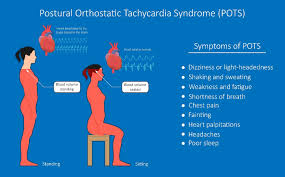
Postural orthostatic tachycardia syndrome (POTS) is a circulatory condition that involves the autonomic nervous systems.
It is also defined as:
An increase in heart rate of ≥ 30 beats/min when moving from a recumbent to a standing position (or ≥ 40 beats/min in individuals aged 12-19 years) held for more than 30 seconds.
The absence of orthostatic (standing) hypotension (low blood pressure) (> 20 mm Hg drop in systolic blood pressure) is required.
The standing (orthostatic) heart rate of individuals with POTS is often ≥ 120 beats/min.
Medscape
One would experience a dramatic increase in heart rate when going from lying to standing and it is relieved by lying or sitting down again as a result can have a significant impact on the quality of life.
There are many types:
Neuropathic (common) – (nerve disorder)
Hyperadrenergic (high levels of stress hormone norepinephrine)
Hypovolemic (Low levels of blood causing symptoms)
Autoimmune (where ones immune system is attacking our nervous system)
Deconditioning (heart damage and low blood volume)
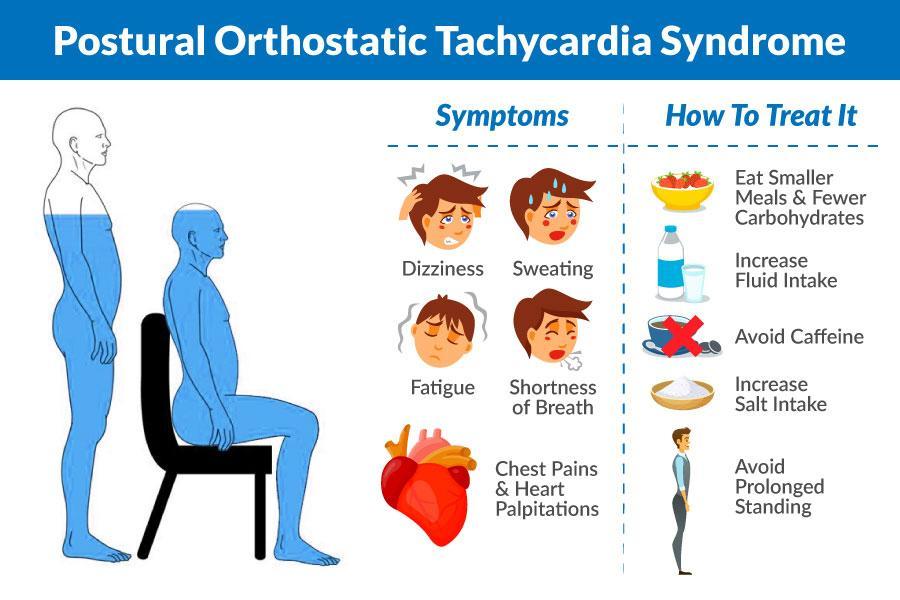
Increased salt intake and water intake as well as dietary changes (eat smaller meals and fewer carbohydrates and reduce caffeine) is considered only under the direction of a specialist dietitian.
Marijuana toxicity – has a complex relation with the heart and blood circulation system – it mainly cause postural hypotension – low blood pressure when standing up. Other symptoms also include tachycardia (fast heartbeat) and tachypnoea (fast breathing) and hypertension rarely]
Take care when getting out of bed – move slowly from lying to sitting to standing
Raise the head of your bed by about 15 cm (6 inches) with bricks or heavy books
Eat small, frequent meals – lying down or sitting still for a while after eating may also help
Increase the amount of water you drink
NHS Choices
Treatments
Nonpharmacologic treatments for POTS should be attempted first.
Regular, structured, graduated, and supervised aerobic reconditioning exercises with some resistance training focused on avoiding upright positioning is associated with symptom improvement in most patients.
Other recommended interventions that might benefit selected patients include drinking 3 L of water per day including liquids coming from fruits and vegetables (under medical supervision/dietician advise and monitoring of blood pressure is required especially if having 3 L a day)
Ingesting 5-10 g of sodium per day (under medical supervision/dietician advise and monitoring of blood pressure is required)
Wearing compression stockings or abdominal binders
Please talk to your healthcare professional (i.e. Medical Doctor/Pharmacist) for further advice
Detailed Information
Please copy and paste any key words from the title: Postural Orthostatic Tachycardia Syndrome (POTS) in the following respective 'Medtick References and/or Sources' to find out more about the disease (this also may include diagnosis tests and generic medical treatments).
The Pharmaceutical Journal covers analysis, features, opinion, learning and careers articles, providing insight and knowledge about drugs, pharmacy practice, medicines use and healthcare policy in the context of the pharmacy profession and pharmaceutical science.
Healthy changes start with little changes. Whether you want to lose weight, drink less alcohol, get active or quit smoking, you have access to lots of free tools and support through Better Health. You can also find simple ways to lift your mood with Every Mind Matters.
There has never been a better time to kickstart your health. Let’s do this!